A Disability Justice Practitioner Reflects on Diverse Queer Representation for Coming Out Day
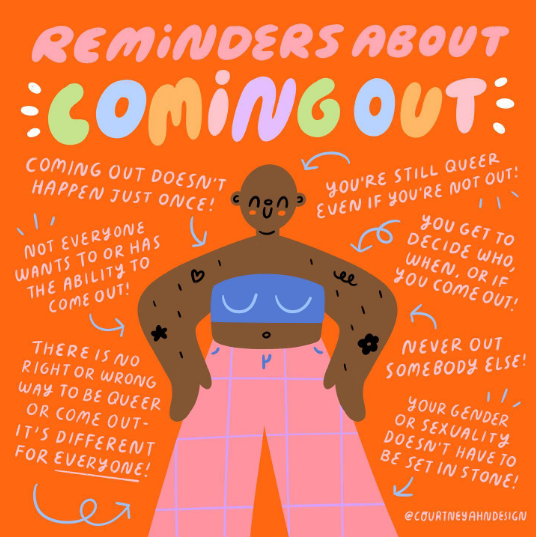
October 11 was first celebrated as National Coming Out Day in the US in 1988, and nearly 4 decades later, I fear for what awaits future generations of LGBTQIA+ folx on Turtle Island as bigotry abounds under the Trump 2.0 regime.
Especially as someone whose biological mother weaponized my queerness against me before I even came out, I wanted to use this opportunity to highlight how Disability Justice has always been grounded in queer liberation.
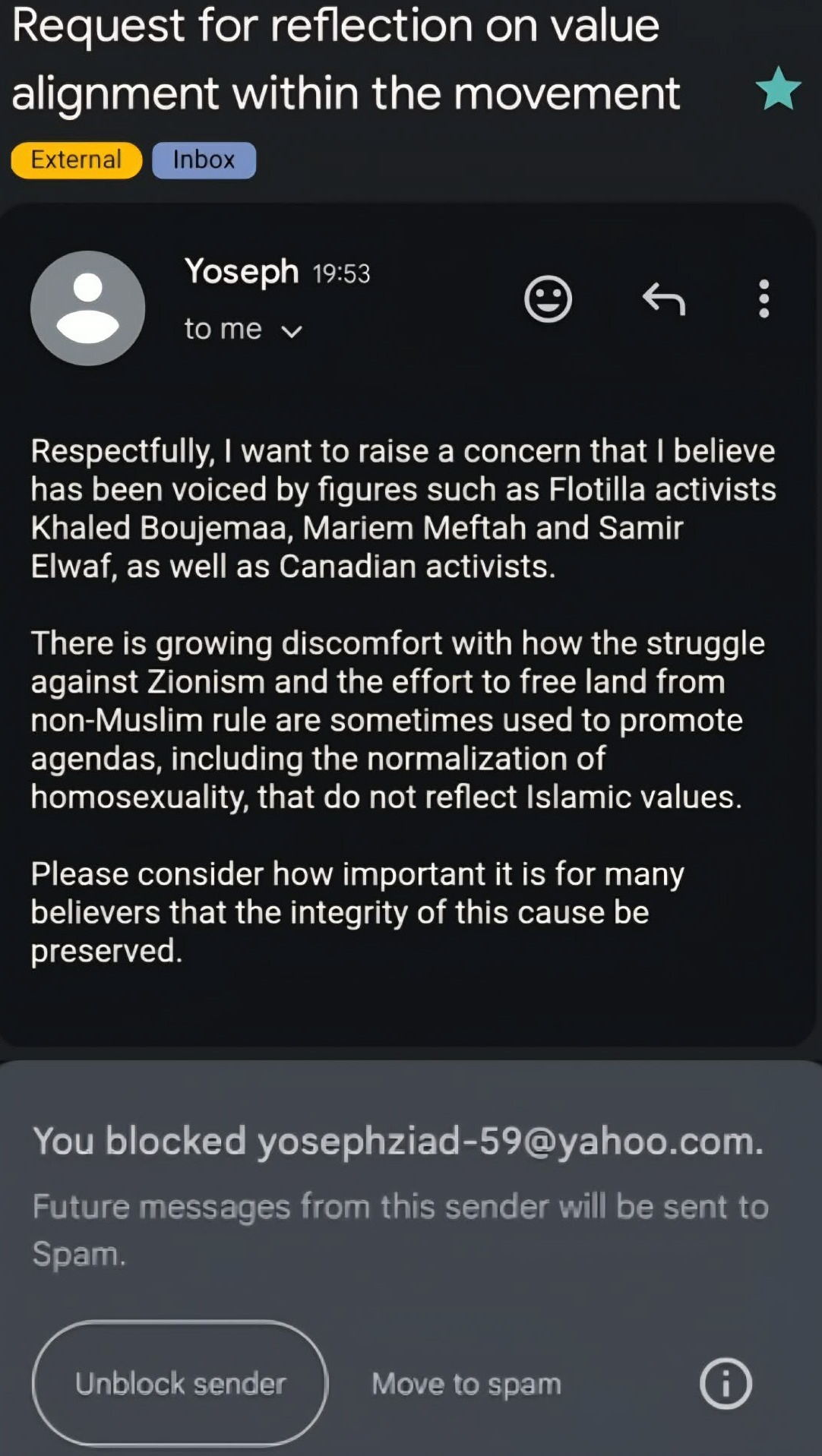
It is why I was infuriated to receive this email from Yoseph, who had the unmitigated gall to contaminate my Inbox with such fuckery months ago, as if my Disability Justice commitment can ever be separated from my queerness:
While a concrete and radical move forward toward justice for disabled people, the Disability Rights Movement simultaneously invisibilized the lives of peoples who lived at intersecting junctures of oppression – disabled people of color, immigrants with disabilities, queers with disabilities, trans and gender non-conforming people with disabilities, people with disabilities who are houseless, people with disabilities who are incarcerated, people with disabilities who have had their ancestral lands stolen, amongst others. In response to this, in 2005, disabled activists of color, originally queer women of color incubated in progressive and radical movements that did not systematically address ableism – namely, myself and Mia Mingus,...began discussing a “second wave” of disability rights and ultimately launched a framework we called Disability Justice."
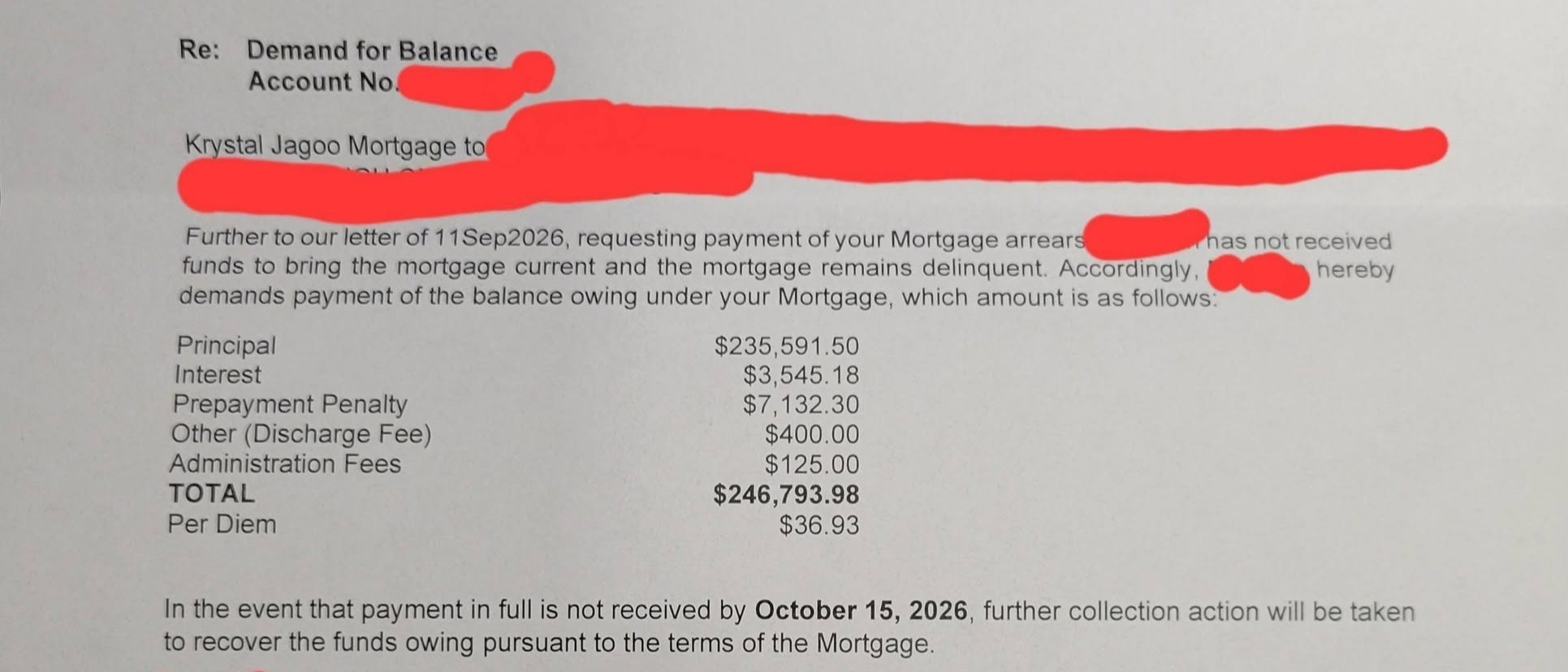
Especially if you have read my last newsletter, I regret to inform you that unless I can pay off my mortgage by October 15, I will soon be unhoused, which reminds me that Ava relied on queerantagonism to escalate housing precarity when she called my high school BFF's dad at his job in 2007 and lied about us being romantically involved to get her family to demand that I leave. Thankfully, her unfounded lies only proved to that BFF's parents just how deceitful she is, and they continued to house me till I rented my 1st apartment.
My university BFF most succinctly describes my approach to life as "authenticity or death" since her daughter 1st said that phrase to her in defiance years ago. Although I had never uttered those words myself until she complained about how much it worries her that my niece takes after me, it resonates. I just wish a fat brown queer disabled immigrant woman like myself was offered opportunities for more equitable outcomes in life, so that a medically assisted death did not feel like my only option amidst debilitating decades of trauma."
As you can probably imagine, as I get closer to becoming unhoused after $183,364+ in financial abuse at the hands of my abusive ex, it has been difficult to keep up with writing, so in recognition of Coming Out Day, I am republishing my 2022 Healthline essay below, as 90s TV shows like Will and Grace made for extremely white understandings of sexuality, and we deserve much better:
Reel Representation: Sexual Health and Sex Positivity
My niece was about eight years old when she described herself as “wavy.”
For her, this meant that while all of her crushes to date had been boys, she knew she wasn’t straight because she prefers the company of girls.
Having only started to self-identify as queer in my thirties, I was surprised by this precious Black child’s ability to claim an identity for herself despite the pressures that heteronormativity and organized religion often place.
Her self-assuredness is likely due in part to her generation having the benefit of improved queer representation in media.
The Netflix hit series “Sex Education” and “Never Have I Ever” are two great examples. They deliver in the form of theatre, digital storytelling, and public art by not only bringing forth conversation of queer identities and sexuality, but discussing sex in a positive way.
Showcasing all sorts of sexualities positively
Within both of these shows, sexual desire is uplifted, rather than being seen as shameful.
One of the great things about both shows is the normalization of sex with all sorts of sexualities and genders from the very beginning.
Main character Devi Vishwakumar’s best friend Fabiola Torres comes out as gay in the first season and dates Addison, a nonbinary character played by a nonbinary actor, Terry Hu.
Aneesa Qureshi, another friend of Devi, never labels her sexuality. Still, we see her dating both Ben and Fabiola in the 3rd season.
“Sex Education” features a few queer couples and sexual relationships, including main characters Ola Nyman and Eric Effiong being in queer relationships for a majority of the three seasons.
While “Sex Education” focuses on the teens within the show, they also include the characters’ middle-aged parents within their ups and downs of intimacy and relationships—a demographic that we don’t often get to see as sexual beings.
The importance of fact-based sex-ed curriculum
“Sex Education” highlights conversations between Otis Milburn and his mother Jean—an actual sex therapist who is very openly sexually active—that make him red in the face.
However, Otis provided sex therapy services through a “clinic,” on the show, giving the UK-based show its name.
It’s clear that while Otis may not be extraordinarily comfortable discussing his self-pleasure habits with his mother, her push for open communication encouraged him to have a positive outlook on sex, relationships, and the communication and safety precautions necessary to properly navigate the two.
The show explores the fear-mongering often associated with abstinence-only sex education programs, acting as an example of why sex education remains a topic of heated discussion for schools around the world.
In fact, a report from the United Nations covers the mental and physical health implications that go along with a lack of fact-based sex education.
Despite healthcare professionals and educators who have long emphasized how these lessons are crucial for youth, the CDC estimates that less than 50 percent of high schools and less than 20 percent of middle schools teach all of the nearly two dozen sex education topics recommended.
Gender diversity isn’t always welcomed
Despite the ways sexuality and gender are shown more prominently in the media, there are still many people—like teens with unaccepting parents—who don’t feel safe being who they are.
It’s important to remember that despite what’s currently showing up on the screen, not everyone gets to let their light shine in real life.
Students aren’t always the bullies
Cal Bowman, a Black nonbinary character, has struggles with the school’s new leadership.
Their troubles showcase how students aren’t always supported by the adults in their lives when it comes to gender and sexuality, especially those from marginalized communities.
This new head teacher, Hope, proves herself to be anti-expression and against her sexually curious students. Hope fails to attempt to understand Cal’s desire not to have clothing tight on their body, and instead chides them for not falling in-line.
Resilience is portrayed, but shouldn’t be expected
The show’s portrayal of Eric, a queer character of Nigerian descent, undoubtedly gave some underrepresented viewers the chance to see themselves on-screen.
Eric is shown exploring makeup in secret at home to avoid his father’s negative opinion, though he has been out as gay with his family for years.
While the artistry of makeup isn’t inherently reserved for women or even feminine individuals, the decision to keep potentially controversial hobbies close to your chest is one that many of us can identify with.
Eric’s character suffered a hate crime in the first season when he was out in town dressed in feminine clothing for a costumed event.
Being beaten up by strangers could have provided confirmation that he wasn’t safe to be himself, but as the show progresses, we see Eric become more and more comfortable showing his skills with highlighter and eyeshadow on a daily basis.
Tough internal questions
Cal’s character connects with Jackson Marchetti, a male character that identifies as straight.
Jackson’s attraction and interest in a nonbinary person for the first time brought forth questions around what that meant for his sexuality, leading Cal to show strength in vulnerability when they asked, “If this was going to become more serious, then you would be in a queer relationship. Is that okay with you?”
This is a common question that arises for a lot of us as we’re figuring ourselves out, serving as another example of representation that viewers can latch onto.
“Hurt people hurt people”
Adam Groff, the previous head teacher’s son, made a name for himself as a bully. Adam makes a point to be pointedly abrasive towards Eric, creating the idea that he’s aggressively homophobic.
We learn later on that in addition to Adam’s homelife being less than ideal, he’s been harboring secrets about his own sexuality and taking those frustrations out on Eric, whom he’s actually attracted to.
There are statistics that show the connection between Adverse Childhood Experiences (ACE) scores and tendencies towards abusive behavior later in life, and those who watch the show will likely have varying responses to the complicated relationship’s development.
In rooting for Eric’s happiness, some may romanticize the connection between the two boys. Others may question Eric’s decision to get close to Adam.
Ultimately, their relationship ends because Adam struggles to get comfortable being honest about it, while Eric wants to be more openly himself.
Whether you can empathize with the decision to hide who you really are or to give grace to someone who hurt you in the past, this plotline and relationship forces us to ask some uncomfortable questions regarding boundaries and abuse.
Many definitions of intimacy
Lily Iglehart is an eccentric, alien-loving character who seems pointedly interested in sex from her entrance on “Sex Education.”
She’s portrayed as pushy, aiming to engage with Otis, but we later learn that she’s not much interested in boys but felt like she was “behind” in terms of her sexual experience.
Devi’s character in “Never Have I Ever” navigates similar pressures, with the first few episodes showing the 10th grader plotting a way to get a boyfriend and have sex.
Devi is visibly nervous when she’s preparing to first engage with Paxton, her longtime crush, but she tries continually to push herself, all while lying to friends about her virginity.
A study in 2014 discussed how adolescents can place pressure on themselves based on an assumption about how their peers may feel, and this depiction of Lily was a great example of what that could look like.
Later, in “Sex Education,” Lily and Ola get closer, and despite a short period of confusing feelings around sexuality for Lily, they realize their mutual attraction.
Their sexual exploration brings up the conversation of vaginismus, a common condition classified as a “sexual dysfunction” that results in involuntary contractions of the vaginal muscles, making penetration painful or uncomfortable.
Lily shares her diagnosis of vaginismus with Ola, leading them to explore other ways to be physically intimate with one another.
Later in “Never Have I Ever,” Devi and Paxton get more comfortable with physical touch. Still, there’s a poignant scene where Devi’s body tenses, leading Paxton to put his shirt back on.
Not only was her decision respected, but Paxton was paying enough attention to his partner to notice her non-verbal cues, and made sure she knew that he would wait until she was ready.
These two depictions of teens having open conversation about their boundaries alongside their desire for one another encourages dialogue between consenting partners about what sex can be.
It’s sex based on mutual respect for each partner’s desires and needs rather than what’s assumed to be “normal” or “necessary.”
Was this representation real?
As a brown woman who never got to see any brown girls on TV shows in my teens, I’m grateful that my niece has much better media representation.
This is especially true for shows like “Never Have I Ever” that show brown Hindu families navigating necessary discussions about how to engage in healthy romantic relationships, or “Sex Education” that encourages open queerness despite what leadership figures may think.
Multicultural and queer characters that are complex human beings are shown engaging in sex without viewing it as “taboo” and having open conversations about their sexual health.
Both “Sex Education” and “Never Have I Ever” remind the audience that we get to be both full, authentic individuals and works-in-progress while navigating healthy sexual desire and relationships.
There’s much more about sexuality and health that these show delve into, including abortion, sexual assault, and disability.
As these shows gear up for more seasons, I look forward to more tough questions being asked and hope they push the marginalized characters further toward the center of the conversations.
Especially since my absent father thinks I am just being stubborn by refusing to call Ava to avoid losing my home, I remain certain that I will not survive my emotional terrorist ex by surrendering to my original emotional terrorist, who weaponized my queerness against me. I will always choose authenticity even if it means death. At least I will get to the end of my days, knowing I have never resorted to becoming another's oppressor, the way both my emotional terrorists have, as they claimed to love me, while actively harming me!🔥"
If you would be willing to put my monthly website payment of $16CAD on your credit card to keep my warnings about the ex who drained me of $183,364+ active in the event of my death as macro-level harm reduction in terms of community safety without carcerality, please email me at krystal@equitableforall.com at your earliest possible convenience!🥹
If able to contribute to my survival following my ex's financial abuse of at least $183,364, which further disabled me, alongside white supremacist workplace trauma, e-transfers within "Canada" may be sent to krystaljagoo@gmail.com and funds may be sent via PayPal below, so please support me if able, as I am desperately close to being unhoused!🙏🏾
BTW, on the off chance that you are looking for a gifted equity practitioner and educator for virtual services like writing, facilitation, and consulting, you are welcome to peruse my CV below, and explore paid services here.
Please consider sharing this newsletter to amplify the reach of my work!🙏🏾
Post a comment