Disability Justice Work Must Include Holding Space for Grief
If you have been reading my Learning, Unlearning, & Relearning with Nuance & Narratives (LURNN) Newsletter since it was relaunched last year, you may recall my discussion in Disability Justice Reflections on Zohran Mamdani's Inauguration, which stated:
...a part of me wondered if we did put that into practice, i.e., literally taught children they are only likely to grow more disabled as they age..."
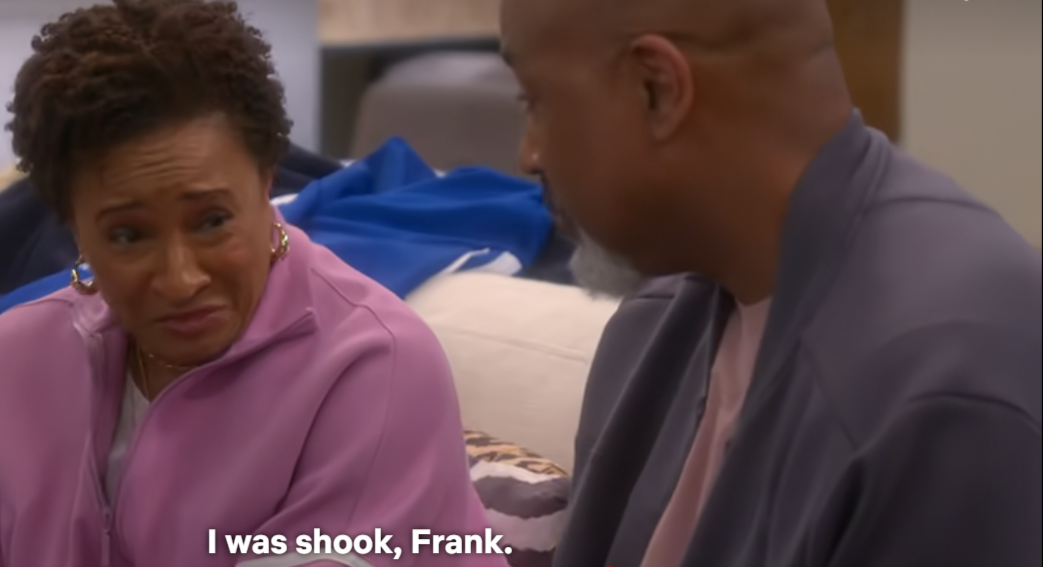
As I watched a beloved Black sitcom last week, I found myself percolating on that discussion about how we do a disservice to younger generations when we fail to be transparent about the grief that often accompanies disabilities, especially as we age, and likely face complications that multiply our losses.
In the episode, the wife character initially appears dismissive of her spouse's pain, injury, etc., until she eventually sobs, admitting that she was shook by his recent hospitalization, as she could not bear the thought of losing him. After this moment, he reassures her, and the laughs resume, as sitcoms tend to do. But I kept thinking about it, as I tend to do. As suggested following Mandani's inauguration, what if we "literally taught children they are only likely to grow more disabled as they age?" And, in so doing, normalized both health concerns and aging as aspects of being human, and then we taught them how to process the grief that can sometimes come from human experiences?
Obviously,...we also need to build communities of care, in which disabled folx are not blamed for our valid access needs, but offered support without dehumanizing conditions, then currently abled folx might be considered pre-disabled, which could prompt discussions about how to care for one another's survival outside of exploitative practices that profit the few..."
To me, that is what the Disability Justice Revolution of my imagination would look like, as I reflect on these poignant words from Skin, Tooth, & Bone - The Basis of Movement is Our People : A Disability Justice Primer:
While we grieve what has been lost, we also celebrate we who remain, and struggle towards what is yet-to-be. Disability justice is a vision and practice of this yet-to-be, a map that we create with our ancestors and our great grandchildren onward, in the width and depth of our multiplicities and histories, a movement towards a world in which every body and mind is seen as valuable and beautiful."
On that note, I invite you to consider how you might operate differently if you felt comfortable to express your grief, as Michéle Pearson Clarke encourages in her 2018 TED Talk (with the understanding that earlier Stages of Grief models have been widely debunked):
What could a grief ritual look like as part of your investment in Disability Justice work? For me, writing often offers an opportunity to process strong feelings on the page, so some potential prompts for journaling might include:
- What might you need to give yourself permission to grieve regarding disabilities, aging, barriers to accessing care, injustice, etc?
- Whose grief will you hold space for?
- How will you hold space for your grief?

For folx who may not be keen on a writing exercise, another grief ritual I do is reading Camisha Jones' Praise Song for the Body poem:
Praise for the body that takes pain and names it survival. That drinks anguish without ruling it bitter. Contains the daggers of sickness and bends them into a good home, a shelter, an escape route. Call this body miracle. Call it sanctuary. Name its ghosts but refuse to believe it is haunted. Refuse to give up on hope and all of its helium, its elevating power to raise this weighted vessel into a thing of light.
My health declined and my grief is endless. Trying to cope through art #art #disability #disabledartist #eds #pots #fibromyalgia #mcas #me #sketch
— Gerdadoingsmth (@gerdafrog.bsky.social) November 5, 2024 at 7:15 AM
[image or embed]
As seen in the gorgeous sketch above, a disabled Bluesky user turned to art to cope with grief over health decline, due to Ehlers-Danlos Syndromes (EDS), Postural Orthostatic Tachycardia Syndrome (POTS), Fibromyalgia, Mast Cell Activation Syndrome (MCAS), and Myalgic Encephalomyelitis (ME), so drawing may offer another option for a grief ritual.
A year later, a participant of that workshop series would tag me in this Instagram post for her art project, "Tazón con flores (bowl with flowers) - To witness grief," which explores her "experience with suffocating grief as an immigrant while also living through the effects of relocation and uncertainty caused by the entrapments of a system." It warmed my heart to see her caption stated, "Fuck borders," as she credited "the amazing BIPOC grief space facilitated" by me, which yielded happy tears:
As happy as I was to inspire such evocative art, her 2025 update forced me to reckon with how I have not gotten any further grant funding from my local arts service organizations, despite a solid track record of well-attended BIPOC-only workshops from 2020 to 2024. Sharing my ongoing experience of navigating grief and encouraging others to hold space for their grief are essential to my practice of Disability Justice, as I never want my survival of oppression to be at the cost of becoming another's oppressor, as I associate with Zionist practices that continue to disable and kill Palestinians. Disability Justice demands opposition of genocide, so I felt compelled to convey a "FREE PALESTINE NOW" message in my artwork for the Beyond the Bar Graph exhibition, which was subsequently censored by Arts Etobicoke. Unfortunately, the loss of income opportunities in the aftermath of my publicly pro-Palestinian liberation stance continues to abound in grief, as I reckon with going from being able to retire at 49 when I still worked in my fulltime permanent unionized hospital job a decade ago, and how I have now cashed out most of those retirement savings, which are soon to be exhausted, after which, I may need to consider a medically-assisted death given my inability to afford to live, as I fail to recover from $183,364+ in financial abuse at the hands of my ex.
BTW, on the off chance that you are looking for a gifted equity practitioner and educator for virtual services like writing, facilitation, and consulting, you are welcome to peruse my CV below, and explore my services here.
As discussed in Remembering Poet, Renée Nicole Good, finding my power in increasingly fascist times looks like connecting the state-sanctioned violence that killed her with the Disability Justice work I have done for decades:
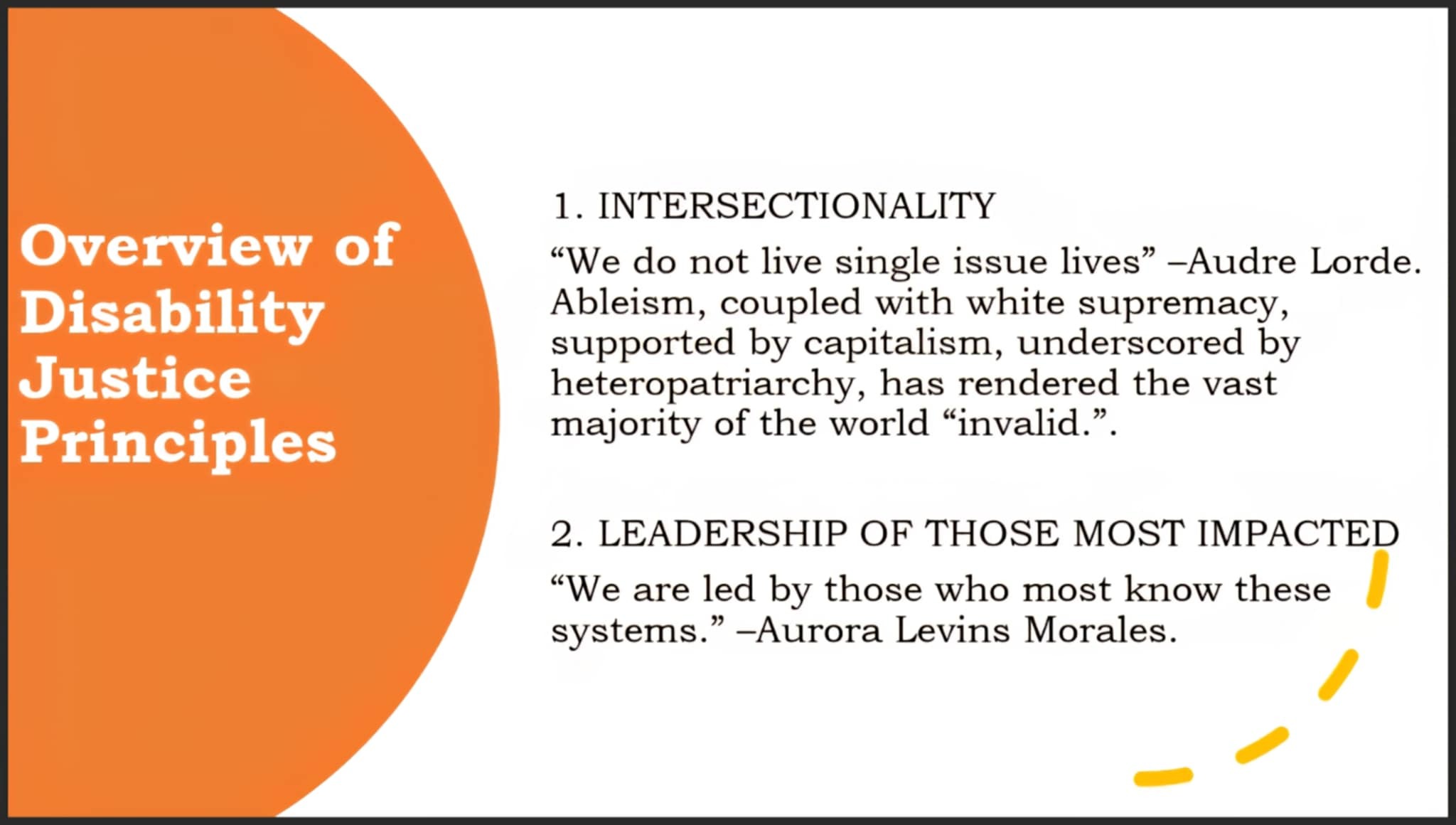
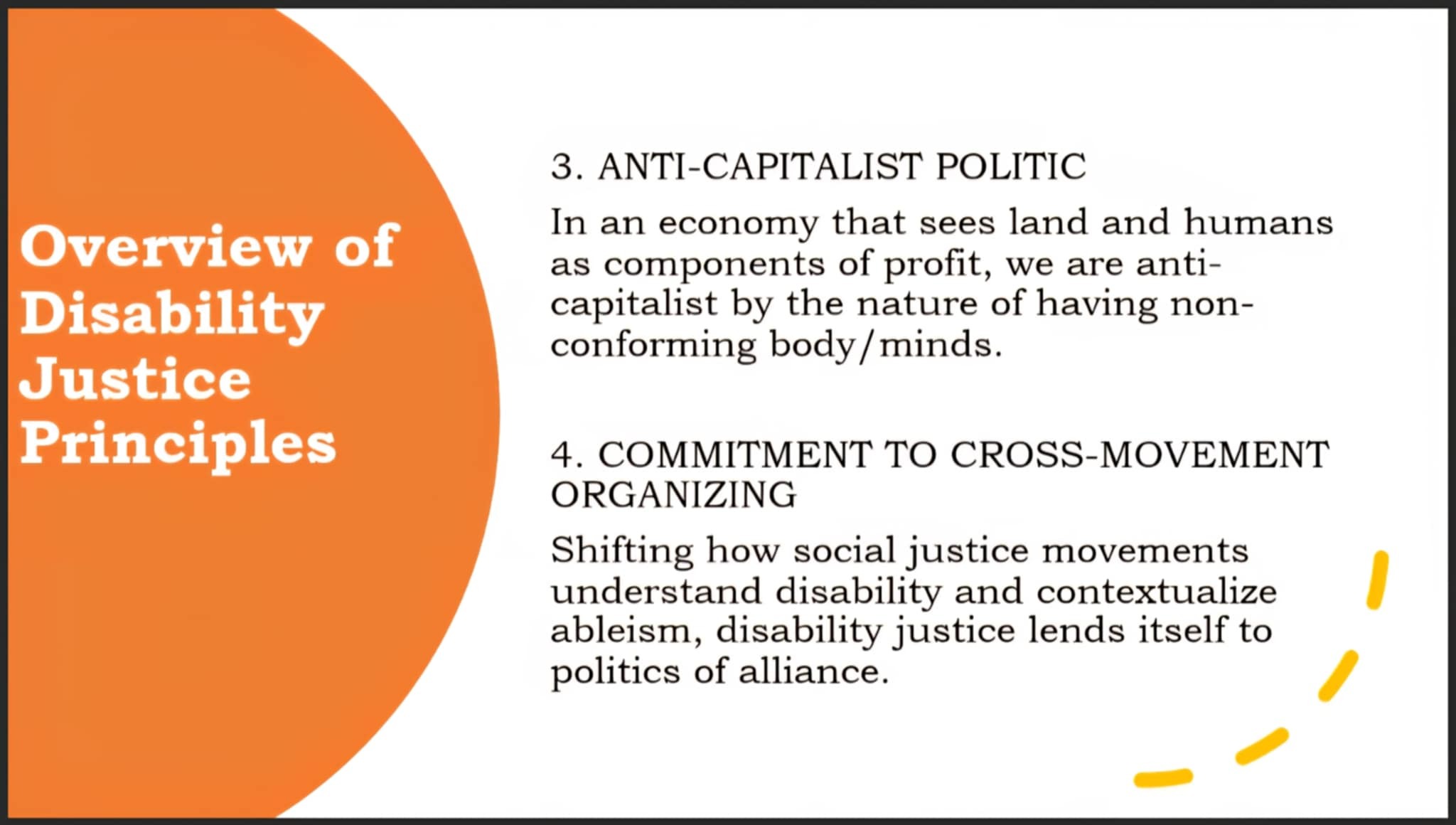
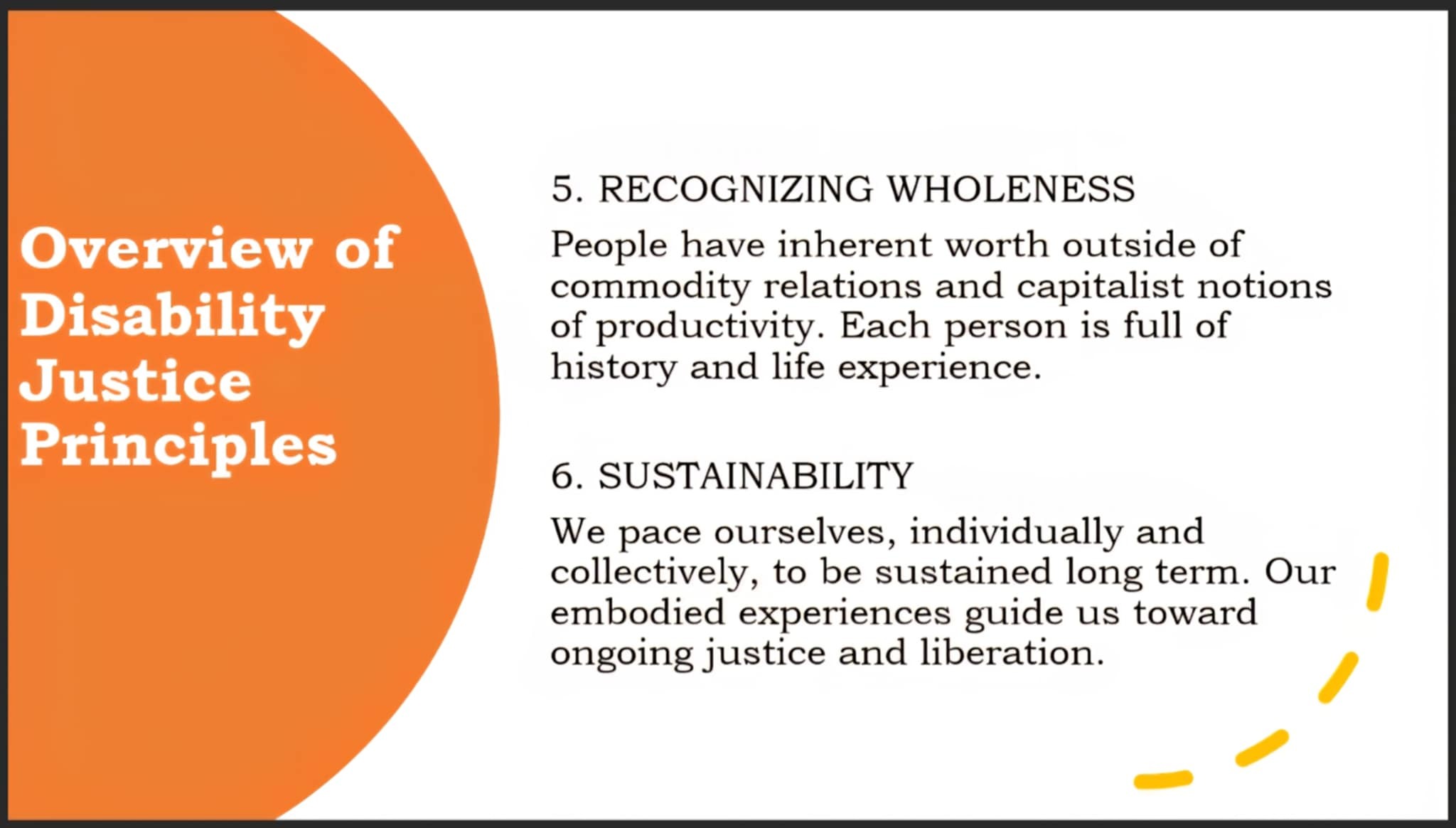
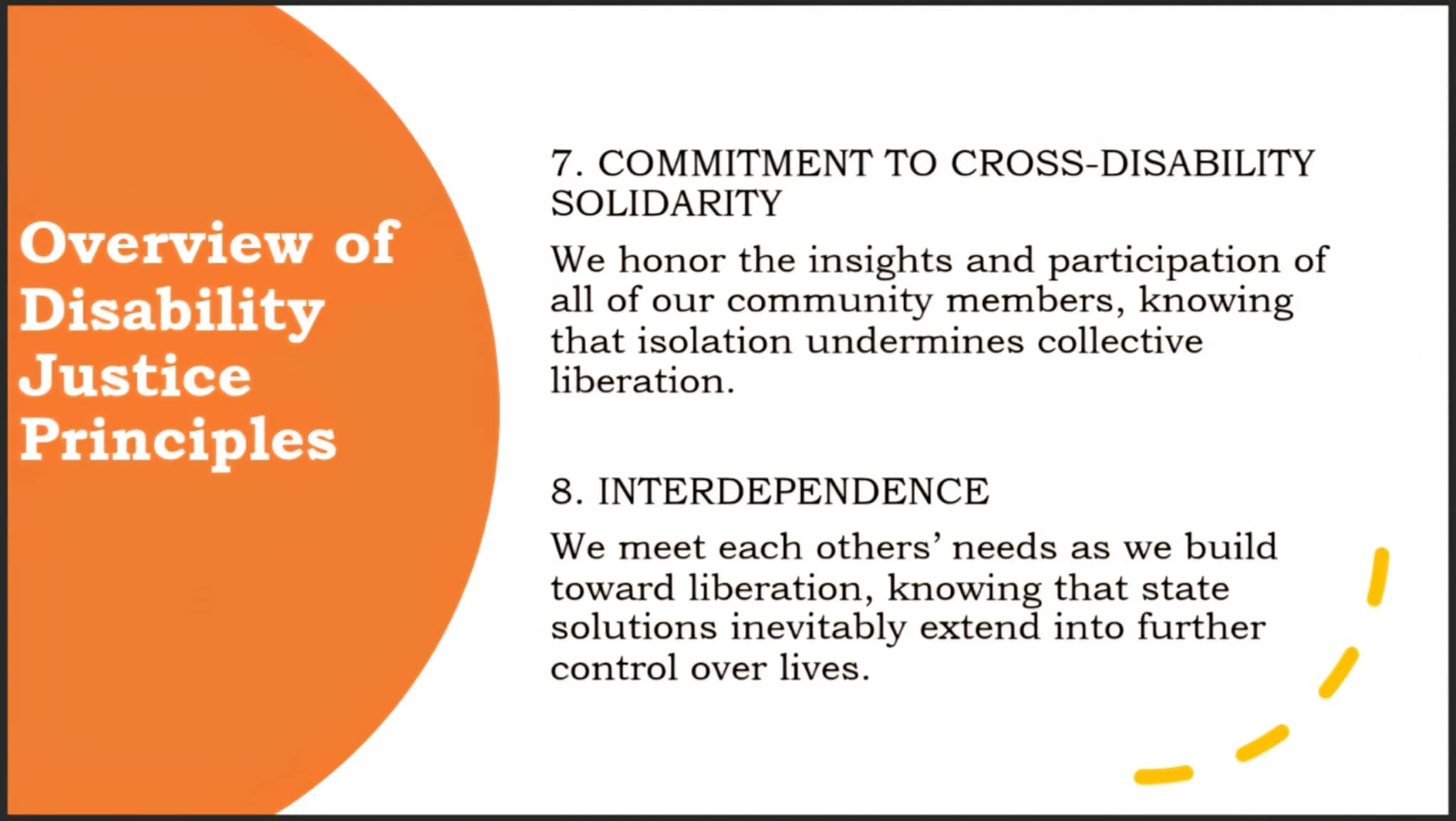
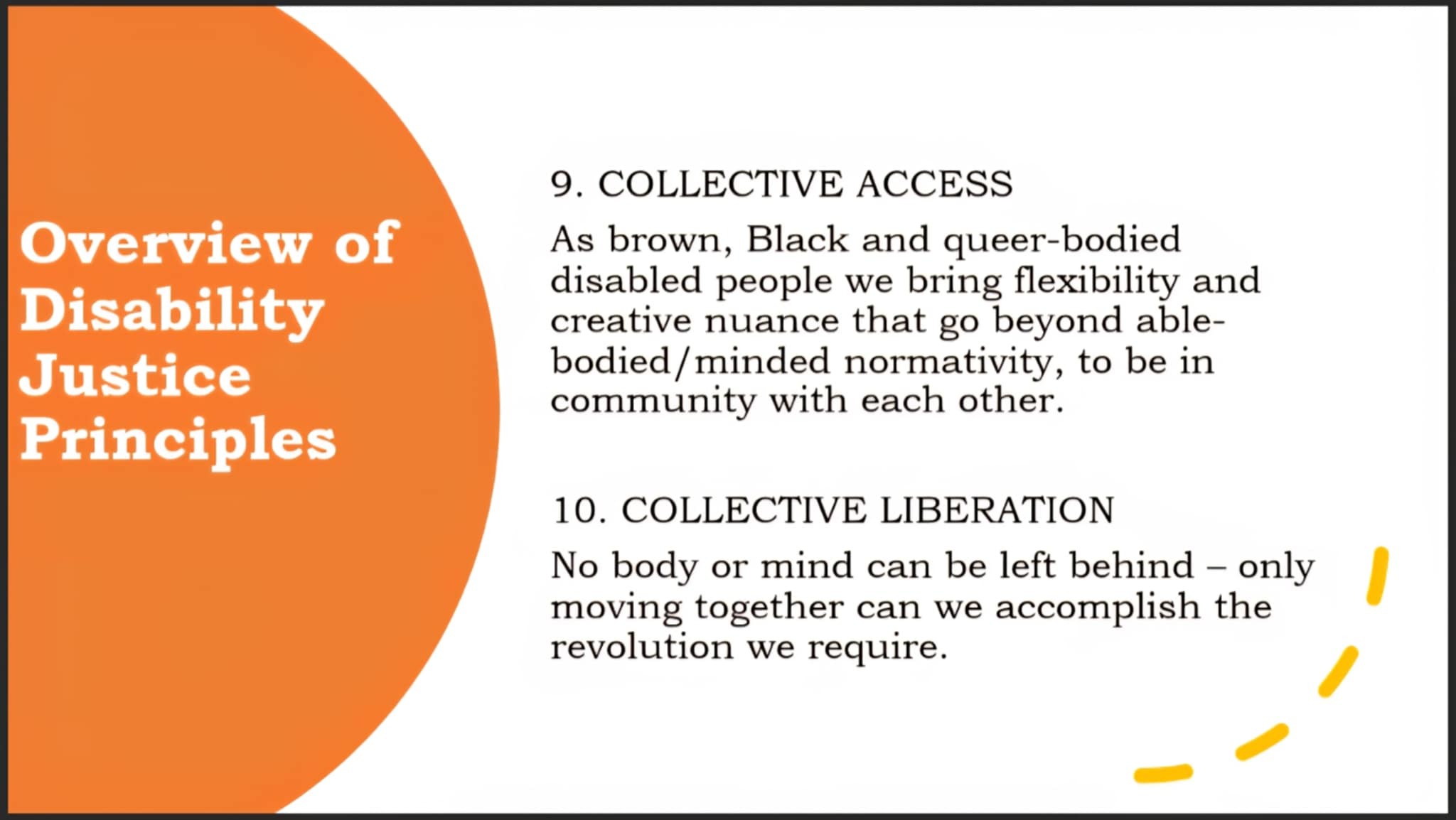
If interested in learning more about the Disability Justice framework developed by Sins Invalid over 2 decades ago, I invite you to attend my 1st free/donations-welcome virtual Disability Justice 101 Workshop for 2026 on Zoom, which is scheduled for 7-9pm EST on Saturday, January 31, 2026, in honour of countless beloved disabled ancestors like Alice Wong, Patty Berne, Tinu Abayomi-Paul, Shafiqah Hudson, Stacey Park Milbern, Ki'tay D. Davidson, Ruby Goorahoo, Audre Lorde, Sojourner Truth, Harriet Tubman, etc.
From February 2026, DJ workshops will initially be made available to paid monthly Ko-fi subscribers, so please consider supporting my DJ work here.
If new to my virtual spaces, I give registrants the 1st 5 minutes to arrive before starting, but generally continue to let folx in until the end. Usually, materials are emailed at least a day before, should advance access aid with feeling comfortable to participate. Attendees are welcome to engage on their own terms, i.e., with no implicit expectation of being on camera, communicating verbally or in the chat, etc. Around the halfway point, a 15-minute-long break is facilitated, after which participants are invited to explore a writing prompt during designated quiet time of 10-20 minutes, depending on preferences. Once the timer ends, participants are invited to share what they wrote or discuss how the process went for them, based on capacity, comfort, interest, vibes, etc. Throughout the workshop, my approach is consent-based, i.e., folx are encouraged to read slides, share feedback, etc., and only those who volunteer to do so are invited to engage further, as there is no pressure to participate beyond one's capacity.
If able to contribute to my survival following my ex's financial abuse of at least $183,364, which further disabled me, alongside white supremacist workplace trauma, e-transfers within "Canada" may be sent to krystaljagoo@gmail.com and funds may be sent via PayPal below, so please consider supporting me! 🙏🏾
Post a comment