Artmaking as Evidence: An Interview with ‘Multimorbid’ Author Rebecca Wood for Poet’s Day
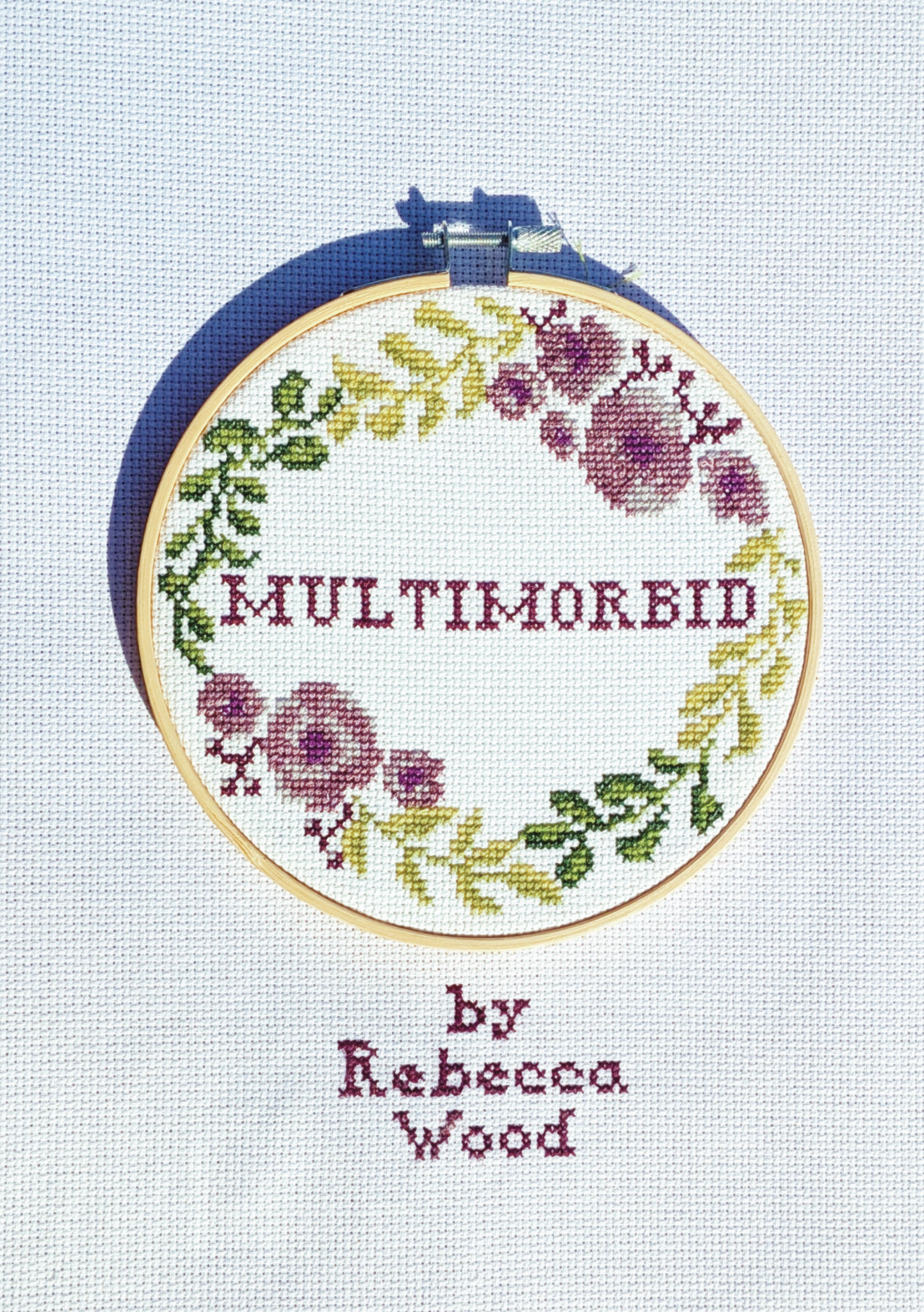
Having connected with Rebecca Wood years ago, I was excited to read her debut book, Multimorbid, which was published on May 28, 2026. I am thrilled to introduce readers to her brilliance for Poet's Day, as celebrated on August 21, 2026, as I encourage folx to reflect on this Chapter 5 quote from Crip Kinship: The Disability Justice and Art Activism of Sins Invalid by Shayda Kafai:
In an interview with Alice Wong, Mia [Mingus] unpacks the importance of leaving evidence. She shares that “we must leave evidence, evidence that we were here, that we existed, that we survived and loved and ate. Evidence of the wholeness we never felt. An immense sense of fullness we gave each other. Evidence of who we were, and who we thought we were, who we never should have been. Evidence of each other, and there are other ways to live past survival, past isolation.” Leaving evidence signals our arrival...For Mia, leaving evidence means that we acknowledge the good and the difficult parts of being disabled. It is a vulnerable act to leave behind the honest, messy, and painful stories about our bodyminds. It is the admittance that our disabled lives are complex and comprised of pride and struggle, that we deserve to exist surrounded by community, just as we are. When we recognize that we deserve to exist, we become the storytellers of our own lives; we become wild tongues, speak-spitting evidence."
What do you want your readers to take away from Multimorbid?
Multimorbid published by kith books, “the literary home of the trans, Crip, queer, & sick” is a collection about the overwhelm of navigating multiple diagnoses, multiple doctors, multiple medications, all while immunocompromised and isolated. I hope that readers who find this work relatable will feel invited in, understood and connected. I hope readers who have not yet experienced seeking care will take from this work a deeper understanding of the complexity and fragility of having a body and navigating medical systems. I hope that, as Mingus says, Multimorbid can be evidence of “other ways to live past survival, past isolation.”
When did you first identify as a poet? What brought you into this work?
I remember writing poetry as a kid but somewhere beyond my teenage years I started to feel embarrassed by calling myself a poet. I still felt compelled to write poems but I didn’t share them with anyone. In 2021 I was trying to find ways to safely connect with others and connect with my creativity and I joined a 6 week virtual poetry workshop. As I started writing more, I felt more at ease playing and experimenting with poetry. I started to realize that I engage with the world as a poet. I notice small details. I find magic in nature. I thrill at an unexpected turn of phrase. I like that poetry lets me express feelings, ideas and experiences that might be painful, impossible, or vulnerable in a form that allows for choice of what I explicitly expose and what I leave open for interpretation. I love playing with rhythm and language and finding interesting ways to explain what I am grappling with. Engaging with my lived experience through poetry has been meaningful for me and by putting work out into the world I am beginning to learn how it can also be meaningful to others. I now feel fully settled that I am a poet.
Who are some poets whose writing resonates with you?
Reading disabled poets has been a point of connection to community for me especially in my most isolated moments. Poets like Rob Macaisa Colgate, Leah Lakshmi Piepzna-Samarasinha, Audrey T. Carroll, torrin a. greathouse, Brandon Wint, and Therese Estacion resonate with me. I have also been incredibly grateful to hear so many resonant poems-in-progress in writing workshops and creative spaces where people are playing with sharing their work as it unfolds.
How do you manage writing alongside your health issues? What advice would you give to emerging disabled poets?
You don’t need to write every day in order to be a writer. The messaging that “real writers” write daily initially activated all kinds of internalized ableism for me but I learned from other disabled creatives how to untangle and unlearn the internalized ableism and how to build access into my writing practice. I don’t write every day, but I think about writing every day and that is enough.
Building an accessible writing practice for me has meant approaching everyday tuned in to where the poetry might be. I pay attention to experiences and I pay attention to how those experiences interact with the feelings, ideas, and uncertainties I am grappling with. I take notes and sometimes those noticings turn into poems. It has been really helpful for me to engage with navigating medical experiences with a poetic perspective. Sometimes a doctor will make a comment and at the same time as I am reacting to the comment, I am aware that that comment is absolutely going in a poem.
It has also been helpful for me to understand rest as part of my writing practice. Sometimes I want to write but feel too foggy and fatigued to really get into it. I try to meet moments where rest is necessary as a signal to let an idea simmer. It can be tempting to put pressure on myself to push through or to get stuck in disappointment that connecting to creativity isn’t always possible, but rest as part of my writing means that even when I pause, it is part of the process.
How might poetry play a role in our Collective Liberation?
Reading poetry has been a way to support my own work of unlearning internalized ableism and unpacking the ways my intersections of my identity impact the way I experience the world and the way the world experiences me. Poetry plays a role because it belongs to all of us. Anyone can write a poem. In 1985, Audre Lorde wrote in Poetry is Not a Luxury that poetry “forms the quality of the light within which we predicate our hopes and dreams toward survival and change, first made into language, then into idea, then into more tangible action.” Poetry offers us an accessible way to express the feelings, describe the experiences, name the injustices in language that we choose. Lorde writes, “For within structures defined by profit, by linear power, by institutional dehumanization, our feelings were not meant to survive.” Poetry opens pathways to put feelings and lived experience into words to create what Mia Mingus described as Evidence. This poetry evidence has the potential to connect us and plays a role in our Collective Liberation both as ways to express ourselves and ways to learn from and with each other.
Anything else you want to share with LURNN readers?
Your stories matter! Since I started sharing my work I have heard a lot of people say "I don't get poetry" or "I'm just not interested in poetry" and I encourage readers to play and experiment with reading poetry (and writing poetry if you feel inspired) because it is not just one thing. You might be surprised (and even delighted, excited, encouraged, engaged) by what you find.
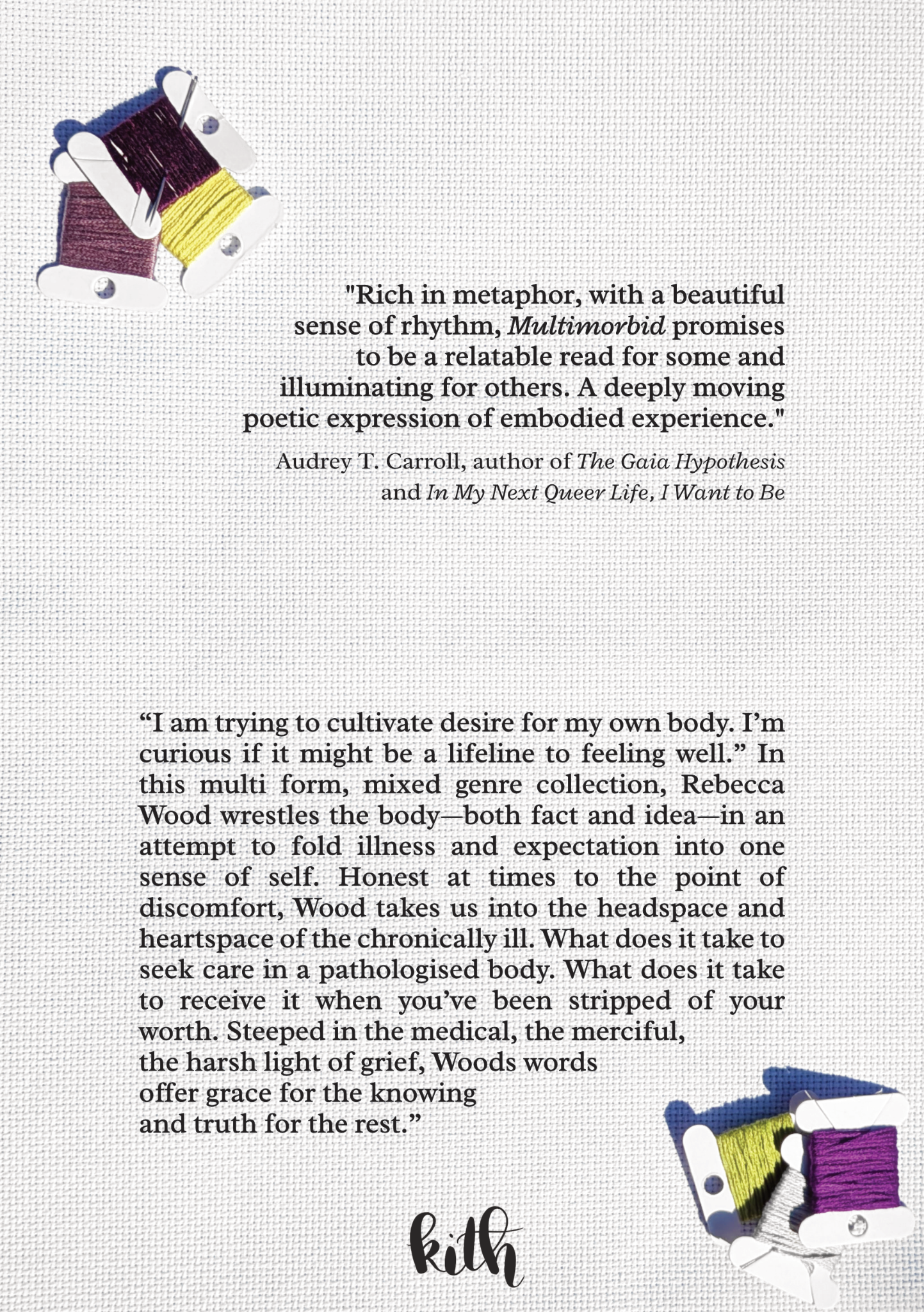
Fat Liberation Month continues, so the author was kind enough to share her prose poem, “Somewhat obese but otherwise well,” which insightfully reckons with how it can feel to navigate the medical-industrial complex in a fat body:
The resident presses my belly through the blue hospital gown. I feel his cold fingertips through the fabric, watch his expression and wonder if he is judging the depth of pressure needed to move through my flesh. I have been in this position before with other residents; naked under open-backed gown, being touched and waiting to see what they feel. My isolation means I haven’t been touched this intimately in over a year. I examine his furrowed brow trying to interpret forehead crease text, writing the pathway of his thoughts as he touches me and visualizes textbook diagrams of organs. Did he learn this diagnostic touch on the first day of class, partnered up with another student? Did they practice feeling their way through each other's fat and fascia, teaching each finger to discern organ arrangements? Am I the fattest person he has had to feel and does that make it more difficult for him to confidently find the contours of my contents? It delights me that this tactile testing, dreamed up by a history of humans trying to understand our insides, hasn’t been entirely replaced by scans and scopes. This diagnostic feeling, a resident probing my belly, is always the beginning of my triennial colonoscopy. We will look inside, but first, touch me.
His fingers don’t find anything wrong, no resistance from my pliable middle. “You are soft. Good.” He notes his findings on the forms, places his clipboard at my feet and signals for the nurse. She compliments the fact that my nail colour matches my hospital gown as she inserts the IV into my right arm. I try to push the “door open” button for her as she wheels my bed to the examination room and she reminds me I am being taken care of. I take a breath and intentionally settle myself into letting go of control. I have diligently followed the preparation instructions and got myself to the hospital and now there is nothing left for me to do. The team of my doctor, the resident and two nurses welcome me into the procedure room. I turn on my left side. Sedation flowing. Camera ready. I relax. I revel in the praise when my 83 year old gastroenterologist tells me I get an “A+” for colon prep. My softness is good, my colon is perfectly clean, I am doing a good job and it feels pleasant to be taken care of in this moment as I watch my intestines on the screen.
A few days later I get the alert that my results are available on the hospital portal and I see that the resident has described me in his clinical note as “Somewhat obese but otherwise well.” I laugh at the language of “somewhat” as a medical term. A jovial “kind of fat.” Not “morbidly obese” or just plain “obese” but a casual comme çi comme ça to describe the extent of my fatness. As though his options were to explain my body as a survey range; somewhat, very, little, not at all fat. I am amused by the “somewhat” and shocked by the “otherwise well.” Does he only distinguish my wellness in relation to my fatness? The next sentence lists my medications and diagnoses and reason for examination, the ulcerative colitis and colon cancer risk that has led to this frequent procedure, and yet my wellness is otherwise. My fatness is somewhat. My illness is missing.
I was a teenager the first time a doctor told me I was obese and the label landed like shame. It wrapped around the curve of my hips and settled into the cellulite divots of my thighs as a problem. The word shaped my body as something to hide. Something to fight. Something to shrink. Fat was wrong with my body before any other diagnosed illness wrongness was written onto me.
I brace myself when I bring my fat body into medical spaces. I meet new doctors, nurses, residents, students, fearing how they might approach my body as a problem. I am always aware of the risk that my size could lead to symptom dismissal or assumptions about me and my health. Every new doctor meeting involves the weight of worry that if I want treatment I need to be an exceptional sick person and an exceptional fat person. I carry with my belly the need to prove myself, justify my food and my movement. I worry that my chronic illness need for rest and slowness will be interpreted as fat failure. The resident told me my softness was good, but the goodness was not noted when the fatness was named in the documentation of me and that documentation gets passed from office to office and informs how I am understood by the next doctor.
I am trying to cultivate desire for my own body. I’m curious if it might be a lifeline to feeling well. Or at least an opportunity to connect to okayness. I see the stories I hold onto about my body’s danger. “Somewhat obese” informing sense of self as “somewhat unworthy.” I am trying to let go of these narratives but sometimes I tumble into self-destructive body hatred that says my fatness is unacceptable. And then it’s an effort to dig out the roots of internalized fatphobia. Weed out the word I sometimes want to use to describe my body; Disgusting. Re-learning, with dirt under my nails, that my harshness isn’t healing. I am working on catching myself before the self-hatred becomes invasive. It hurts that it is still hard.
I want to believe that my weight isn’t indicative of my health. My health isn’t indicative of my worth. Sickness is sometimes sedentary. Rest is sometimes survival. Insulating is sometimes protective. I want to embrace my life and my body. Be embodied. I want to let go of wishing my body were otherwise and start living in the reality of what ‘well’ means for me. I’m not going to be saved, there is no future where I am “healthy” but maybe I can adopt an attitude of loving ‘somewhat well.’ It might seem like a low bar for the healthy, but I can choose to see my body as just sick or I can choose to see my body as somewhat well and that feels like grace."
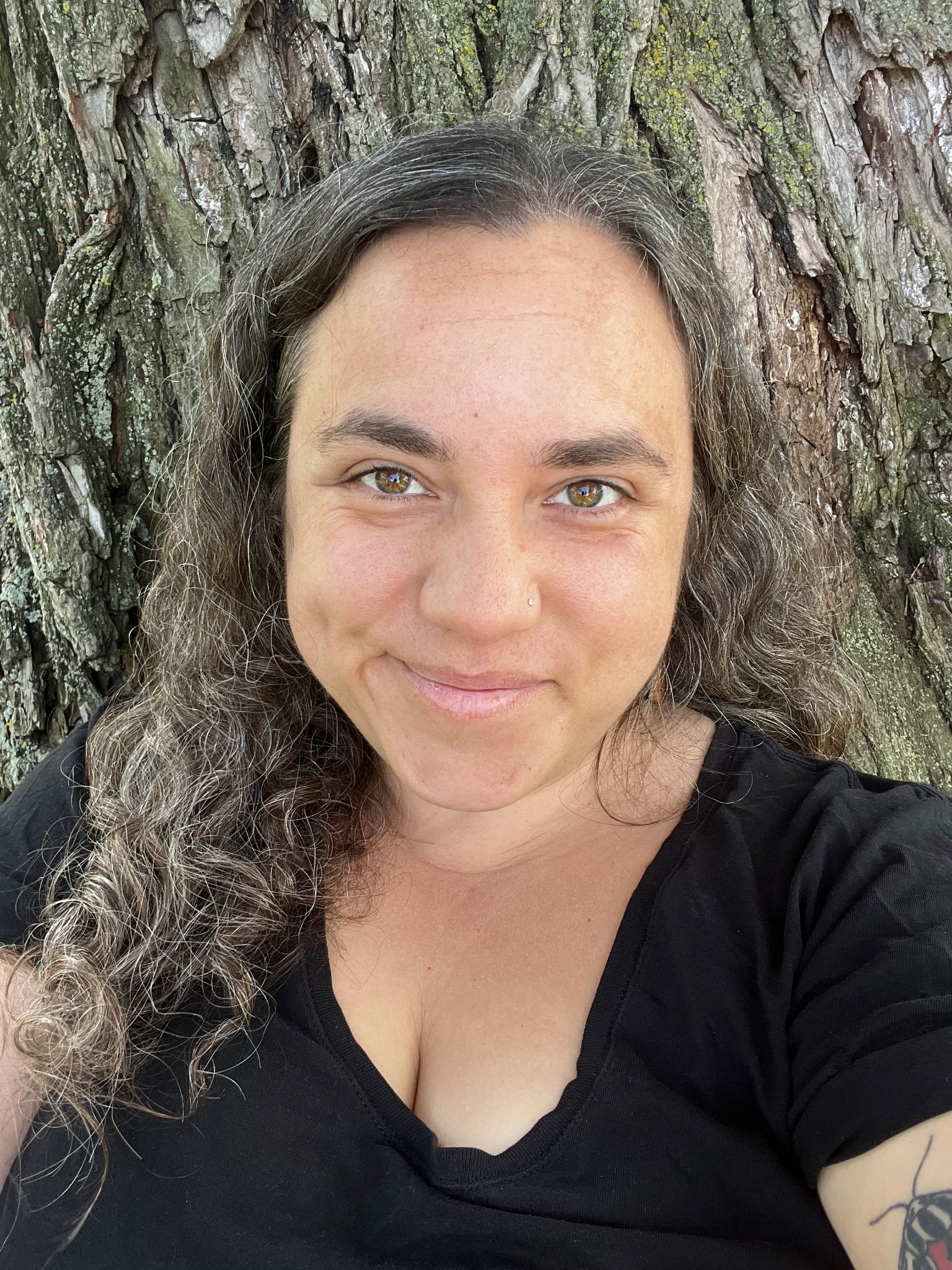
Rebecca Wood (she/her) lives with her plants and craft supplies in Toronto, Ontario. Her poetry, and creative nonfiction explore what it means to exist in a body with multiple chronic illnesses and episodic disability. She has always used writing to make sense of her inner and outer world and is unapologetically enamoured with lengthy luxurious lines of alliteration.
Her work can be found in Poetry Pause, The Whitewall Review, Room Magazine, Transition: Canadian Mental Health Association Magazine, Feels Zine, Wordgathering: A Journal of Disability Poetry and Literature, Corporeal, and Pinhole Poetry. Her debut poetry collection Multimorbid was published by kith books in May 2026. Find her on Bluesky @bextatic.bsky.social and on Instagram @knots_and_clay
If able to contribute to my survival following my ex's financial abuse of at least $183,364, which further disabled me, alongside white supremacist workplace trauma, e-transfers within "Canada" may be sent to krystaljagoo@gmail.com and funds may be sent via PayPal below, so please support me if able, as I am desperately close to being unhoused!🙏🏾
BTW, on the off chance that you are looking for a gifted equity practitioner and educator for virtual services like writing, facilitation, and consulting, you are welcome to peruse my CV below, and explore paid services here.
Please consider sharing this newsletter to amplify the reach of my work!🙏🏾
Post a comment