The Disability Justice Revolution We All Need Will Never Include Access Intimacy Abuse
I remember it vividly, that 2019 day when I first stumbled upon Mia Mingus’ Access Intimacy blog post. I was in my New College office, in between bites of the cheapest lunch I could afford, while still an Accessibility Advisor at Canada’s largest university.
I did not yet identify as disabled though, as that would come later, during the height of the ongoing COVID-19 pandemic, but before vaccines heralded “the new normal” I have yet to experience, as I came to more fully understand how disposable most found me.
With each sentence that I read, I hungrily devoured her insights about a unique connection that disabled folx forge when we feel like our access needs are taken into consideration in how others engage with us, as it became my new guiding principle in how to support my partner with respect to his health issues, as I prided myself on nurturing access intimacy in every single aspect of our relationship from that point on.
Back then, I had no inclination that a global pandemic was on the horizon, but when my partner was hospitalized within weeks of our first date, and needed financial support to survive, I did what I only hope others would have done if I were in such desperation. And I kept doing it, until finding his wedding registry with another woman seventy-six long months later, after which, he would deflect, then publicly lie on me in a Facebook post.
It would take over a year before I could force myself to calculate all the e-transfers I had sent him from May 2018, when we began dating, to September 2024, when I discovered his betrayal, none of which he has repaid. And I only did so, because a scholarly friend and I were scheduled for a conference presentation about “Access Intimacy Abuse,” the term I coined to capture violations we had both experienced by BIPOC LGBTQIA+ disabled folx.
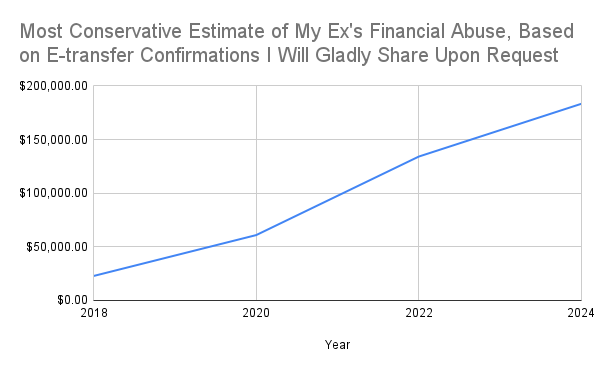
There were a total of 426 e-transfers, which culminated in $183,364 in what I can now call, “financial abuse,” and for that, he deserves credit, as his commitment to toxic gaslighting culminated in a public Facebook post, which stated, “When people try to move like they own you, remind them that you are an autonomous being✨” Had my single remaining close white grad school friend not kept an eye on his Facebook, I may not have obtained that key I needed to unlock the truth that he likely lied to me more than he was ever honest, as he preyed on my bleeding heart through the guise of “love.”
Once I saw those lies, I finally understood what a Black biracial disabled grandma friend had said when I first discovered his wedding registry, and was trying to reconcile hating his deceit with my ongoing commitment to Disability Justice, i.e., “He ran game on you!”
If he could lie to me, cheat on me, and violate me in countless ways galore, no wonder he also felt comfortable to lie on me too, but if I not been gifted with that lightbulb moment from my neurodivergent social worker friend, I may not be here today, as it has been an excruciatingly long decade of surviving white supremacist settler colonialist ableist workplace trauma in both the medical-industrial complex and the academic industrial complex, so by the time I discovered that my ex was capable of such diabolical acts against a fat brown queer immigrant woman further disabling herself through cycles of overwork and burnout to pay both his bills and hers for seventy-six long months, staying alive was much harder work. And staying alive when unable to afford to file my income taxes since 2020 because I thought I was supporting my more marginalized partner who had no other options for survival, is even harder work after discovering his wedding registry in 2024, i.e., the year that I finally pay off my high-interest medical loan for his urgent 2020 eye procedure for which he had coerced me into paying.
I share all this because the Disability Justice revolution we need will not come without a frank discussion about how many disabled folx have been harmed by other disabled folx who preyed on us, based on our perception of shared Disability Justice values.
It is why I coined the term, “Access Intimacy Abuse,” which I define, as follows: an elusive, hard to describe feeling when the perception that someone else “gets” our individual unique access needs is weaponized to take advantage of that person, who considers their abuser safe, based on shared experiences of oppression, perceived to inform their values, despite how the abuser is actively gaslighting and harming them.
In fact, I hosted a virtual Access Intimacy Abuse Launch Party with a couple of disabled friends who I metaphorically leaned on to curate the language to capture these violations that I had suffered, much like one of my guests, at the hands of their ex.
The original hermit crab essay I crafted to capture my ex’s Access Intimacy Abuse of me was a Bingo card, but upon sharing it with some BIPOC writers, a local Black woman suggested that a Snakes and Ladders game board would portray his deceit more powerfully, so it would end up being transformed into that container, but not before beginning to trust another Black man who would engage in Access Intimacy Abuse of me within a few short months.
My point is that although disabled folx may have lacked the language to articulate this phenomenon until now, my discussions since coining the term lead me to believe that Access Intimacy Abuse is a rampant issue within all our disabled communities, which is why I am committed to highlighting this issue for the public, in the hopes of preventing others from suffering like me.
To better understand this devastating reality about working in solidarity with other oppressed groups as a multiply-marginalized disabled person, we need to connect Mia Mingus’ Access Intimacy insights from her blog post with L. X. Z. Brown’s point from their 2017 Letter to Activists, which states, “Now is not the time to pretend that all is right...in left or radical spaces..., because it is not. I have experienced more trauma and abusive behavior from fellow activists and organizers, people who shared experiences of marginalization, people who worked together with me on campaigns and actions, than I have from people outside so-called movement spaces. I understand that’s not the same for everyone, but I know that trauma from movement people is a thing, and as an autistic person, I’m naturally wired to be good at pattern recognition.”
In fact, I first met my ex when he was facilitating a workshop training on “Accountability, and Safer Spaces in Organising,” so I had no reason to suspect that he would exploit me when his entire basis for offering workshops like that was lived experience of oppression, as he lacked formal education related to equity work, but if his lived experience also includes debilitating his disabled partner of 6.5 years, do I not have a responsibility to warn folx about him?
Once we grasp that words do not necessarily mean things for all, how they painstakingly do for me, we need to connect that with Leah Lakshmi Piepzna-Samarasinha’s insights about the need for “a fair trade emotional labour economy,” which states, “The thing about being working class or poor…or disabled…or parenting…or Black, Indigenous or brown…[or feminized] is that people are going to ask you to do stuff for them.”
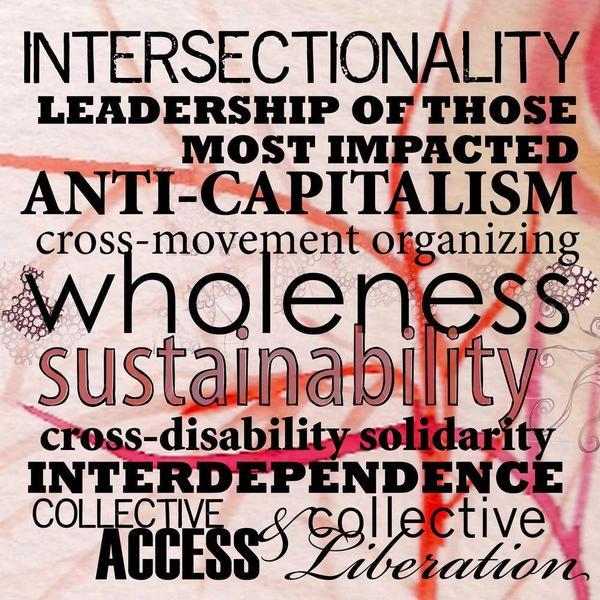
What that looks like in practice is my ex exploiting me like a mule, then lying about it to continue to harm me with toxic gaslighting, while essentially digging my grave with what I have come to call, “emotional incarceration,” to facilitate financial abuse that would leave me much more disabled in the aftermath of his gender-based violence against me, to the point where I have begun to consider a medically assisted death due to my inability to figure out the logistics of surviving at least $183,364 in exploitative e-transfers, which may only be but a third of the full extent of his financial abuse of me. His abuse fueled debilitating cycles of overwork and burnout, which intensified my migraines and sleep issues, as disordered eating challenges began, likely exacerbated by food insecurity from further financial precarity in the aftermath of constructive dismissals from the medical-industrial complex and the academic-industrial complex, exploitation in the nonprofit-industrial complex and publishing, etc. It is why I share my story, and hope folx grasp how his Access Intimacy Abuse connects with the Disability Justice principles of intersectionality, leadership of those most impacted, anti-capitalism, cross-movement organizing, wholeness, sustainability, cross-disability solidarity, interdependence, collective access, and collective liberation.
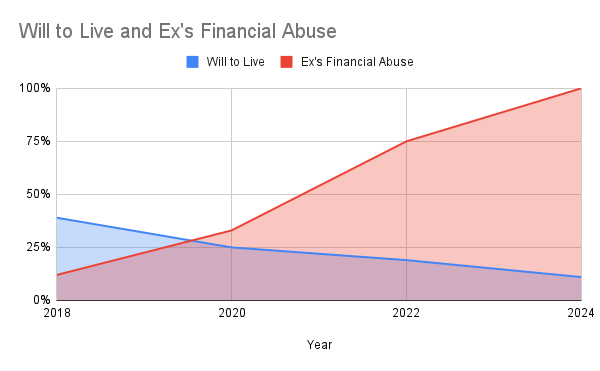
For me, the revolution looks like warning disabled kin about Access Intimacy Abuse as macro-level harm reduction to prevent them from joining disabled ancestors like Alice Wong, Patty Berne, Tinu Abayomi-Paul, Stacey Park Milbern, Ki'tay D. Davidson, Ruby Goorahoo, Audre Lorde, Harriet Tubman, etc., whose legacies I strive to embody when I remind myself that for disabled writers, just taking up space is revolutionary, and pick up my metaphorical pen. In fact, Octavia Butler stated, “The very act of trying to look ahead to discern possibilities and offer warnings is an act of hope,” so sharing my story is itself part of my daily practice of grounded hope in my actions, as Mariame Kaba advises, taking inspiration from a nun, in Hope Is a Discipline from We Do This ’Til We Free Us: Abolitionist Organizing and Transforming Justice.

As I try to open up my most traumatized and disabled self to the revolution, I remember that although my ex deemed me disposable, I never was. I call for solidarity from each and every person to bring into fruition the world we need, as I affirm that disabled folx matter. In doing so, my trauma can birth a new world, free of Access Intimacy Abuse. A world beyond the revolution is one where disabled folx get to name how we have been harmed, without victim blaming, as Zora Neale Hurston reminds us, "If you are silent about your pain, they will kill you and say you enjoyed it,” so I imagine a better world, even as I come to accept that I am unlikely to afford to exist long enough to enjoy it.
BTW, on the off chance that you are looking for a gifted equity practitioner and educator for virtual services like writing, facilitation, and consulting, you are welcome to peruse my CV below, and explore my services here.
If able to contribute to my survival following my ex's financial abuse of at least $183,364, which further disabled me, alongside workplace trauma, e-transfers within "Canada" may be sent to krystaljagoo@gmail.com and funds may be sent via PayPal below, so please consider supporting me! 🙏🏾
Post a comment